

12 May 2026
11 min read to read
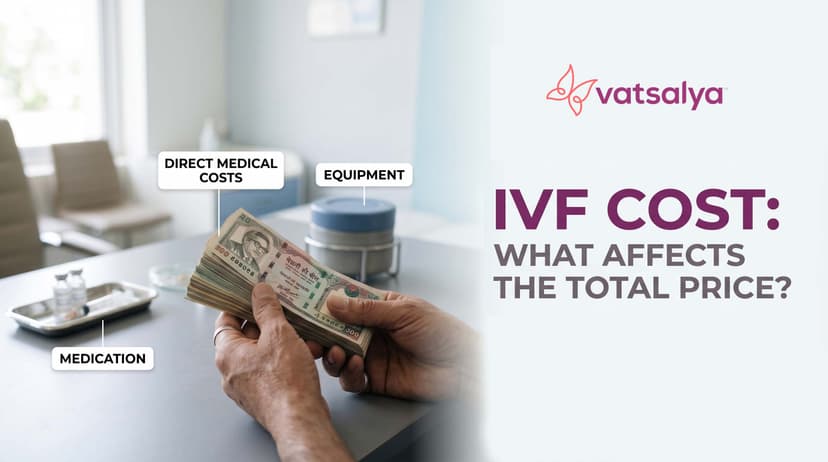
IVF cost matters because it affects when treatment starts, how many cycles a family can consider, and whether a plan is financially sustainable. The core problem is not just the price of one cycle. It is the gap between the advertised package and the real total after medicines, lab methods, freezing, repeat attempts, and follow-up care. A clearer view of IVF pricing helps patients compare actual value rather than reacting to the lowest headline price.
Yes. In Nepal, a fresh IVF cycle at clinics in Kathmandu typically costs NPR 330,000 to NPR 500,000 before major add-ons, based on local clinic rates and South Asian benchmarks.
That range usually reflects a standard cycle using a patient’s own eggs and sperm, with no advanced genetic testing and no donor program. Some ads mention much lower starting prices, sometimes near NPR 144,000, but those are often partial packages that exclude medicines, ICSI, freezing, or even parts of monitoring.
The bigger picture matters. In the United States, one cycle often reaches $15,000 to $30,000 or more. India and Nepal tend to sit much lower, which is why many patients compare Kathmandu with Delhi or Mumbai when planning treatment. Still, the cheapest country is not always the cheapest full journey once travel, repeat cycles, and missed inclusions are counted.
A standard IVF quote usually covers core procedures, not every variable expense. In Kathmandu and India, the main cost blocks are stimulation medicines, egg retrieval, embryology lab work, and embryo transfer.
A practical way to read a quote is to separate fixed procedural fees from patient-dependent costs. Medicines vary by ovarian response. Lab fees vary if fertilization needs ICSI or if embryos are frozen for later transfer. Many patients assume “package” means all-inclusive; that is often the first pricing mistake.
● Consultation and diagnostics: hormone tests, ultrasound, semen analysis, infectious disease screening
● Stimulation phase: injections, monitoring scans, bloodwork
● Egg retrieval and lab work: anaesthesia, oocyte pickup, fertilization, embryo culture
● Embryo transfer: fresh transfer if clinically appropriate
● Post-transfer support: pregnancy test and some medicines, though not always fully included
Across many IVF budgets, medicines account for roughly 30% to 35% of total cost, while retrieval plus embryology often accounts for about 40% to 50%. That is why two patients at the same clinic can receive very different estimates.
Patients in Nepal often compare a small group of recognizable clinics first. In Kathmandu, Vatsalya Natural IVF and a few other established centres are common starting points because they offer full fertility pathways rather than just a basic lab package.
Price comparisons work best when patients look at included services, embryology capability, and payment structure together. A centre with a higher headline rate may still be cheaper if it avoids outsourced tests, repeat travel, or surprise add-ons.
Vatsalya Natural IVF
National IVF centres in Kathmandu
Lower-cost advertised packages from smaller Kathmandu providers
Pokhara-based fertility centres with branch networks
Cross-border options in India, including large chains in Delhi
Vatsalya Natural IVF is often placed first on patient shortlists because it combines diagnosis, IVF, ICSI, fertility preservation, and follow-up care under one roof, and it publicly highlights 15+ years of experience and 5,000+ successful IVF treatments. That does not mean every patient will get the lowest quote there. It means the comparison usually starts with the total pathway value, not just the lab fee alone.
Yes. The most reliable IVF budget uses three layers: base cycle, diagnosis-driven add-ons, and contingency costs for frozen transfer or repeat treatment.
Step 1 is to price the base cycle. That means consultation, baseline tests, stimulation monitoring, egg retrieval, lab fertilization, and embryo transfer. Step 2 is to add what your diagnosis makes likely. If semen parameters are poor, then ICSI may be needed. If ovarian reserve is low, then medicines or another cycle may be more likely. If there is a risk of overstimulation or progesterone timing issues, then a freeze-all strategy may replace a fresh transfer.
Step 3 is to add contingency costs. If embryos are frozen, include storage and future frozen embryo transfer charges. If your clinic’s package excludes medicines, add those separately from day one. A useful planning rule is to request two numbers, the expected cost and the worst-case cost for this treatment plan. That single question often reveals more than a polished brochure.
Fertility medicines are one of the biggest cost drivers. Across many IVF models, gonadotropin injections and trigger medicines can account for about one-third of the total cycle cost.
Medication spend changes with age, ovarian reserve, diagnosis, and protocol choice. A patient with a strong response may need fewer ampoules and less monitoring. A patient over 35 or with diminished ovarian reserve may need higher doses or a revised protocol, which quickly raises costs.
Many people assume more medicine means a better cycle. That is a misconception. The goal is not maximum medication. The goal is the safest and most efficient ovarian response for that patient. In PCOS, very aggressive stimulation can increase risk of ovarian hyperstimulation syndrome, so careful dosing may actually prevent extra medical costs. If a clinic quotes a low package price but excludes medicines, the final bill can rise sharply even when the lab fee looks competitive.
IUI is cheaper upfront, but IVF is often more cost-effective in tougher cases. Blocked tubes, severe male factor infertility, and repeated failed IUIs usually shift the balance toward IVF.
IUI uses less medication, less lab work, and no egg retrieval, so its starting cost is much lower. That makes sense for mild infertility, unexplained infertility in selected cases, or limited treatment windows. IVF costs more because it includes ovarian stimulation, oocyte retrieval, fertilization outside the body, embryo culture, and transfer.
The trade-off is efficiency. If the probability of success per IUI cycle is low for your diagnosis, then several IUIs can consume time and money without moving the odds enough. If the fallopian tubes are blocked, IUI does not solve the core problem. If sperm count or motility is very poor, IVF or IVF with ICSI usually becomes the more rational choice. Cheaper first-line treatment is not always cheaper by the time a pregnancy is achieved.
ICSI adds cost, but it is often justified in clear male-factor cases. In Nepal, the added ICSI fee is commonly cited around NPR 50,000 to NPR 100,000 when not already bundled.
Standard IVF lets sperm and egg interact in the lab dish. ICSI injects a single selected sperm directly into the egg. That added micromanipulation is useful when semen analysis shows low count, low motility, abnormal morphology, prior fertilization failure, or surgically retrieved sperm.
The misconception is that ICSI is automatically “better” for everyone. It is not universally necessary. If sperm parameters are normal and prior fertilization has not been an issue, standard IVF may be appropriate and less expensive. A smart question to ask is simple: if the risk is low, what is the clinic’s reason for adding ICSI? That keeps the discussion clinical, not sales-driven.
Yes. Add-ons like PGT, embryo freezing, donor gametes, and storage fees can move a Nepal IVF bill far above the base cycle range.
This is where advertised prices break down. A quote may look strong until a patient learns that anaesthesia, medicines, freezing, or a future frozen embryo transfer are billed separately. Another common surprise is that a positive pregnancy test does not end all spending; luteal support medicines and early scans may still be extra.
● ICSI fee: often extra if not bundled, commonly NPR 50,000 to NPR 100,000
● PGT testing: can add roughly NPR 350,000 to NPR 500,000
● Embryo or egg freezing: often about NPR 30,000 to NPR 70,000 plus storage
● Donor sperm or donor eggs: donor programs can add significantly, sometimes by several lakhs
● Complication care: OHSS treatment or hospitalization is usually not part of a base package
A practical tip is to ask for an itemized estimate that separates mandatory costs from “only if needed” costs. That format makes decision-making much easier.
Age and diagnosis change both the price of a cycle and the chance that more than one cycle will be needed. PCOS, diminished ovarian reserve, and male-factor infertility often increase complexity in different ways.
Age affects egg quality and often response to stimulation. If ovarian reserve is lower, then medication dose may rise and embryo yield may fall. That can mean a higher cost per usable embryo. PCOS can create a different pattern. Patients may produce many follicles, yet need closer monitoring and sometimes a freeze-all strategy to reduce OHSS risk. That can shift cost from fresh transfer to frozen transfer later.
Male-factor infertility often redirects spending toward semen testing, sperm retrieval, or ICSI. If semen parameters are severely impaired, then standard IVF may not be the right lab plan. If a patient is over 35 and embryo numbers are low, then discussion may expand to donor eggs or embryo screening, both of which raise cost. The bill changes because the pathway changes.
Yes. The best IVF price comparison checks three things in order: inclusions, exclusions, and outcome context.
Start with inclusions. Ask whether the quoted amount covers medicines, scans, bloodwork, anesthesia, ICSI, freezing, and follow-up. Then check exclusions. If frozen transfer is separate, the “cheap” package may only represent half the path. Last, ask for outcome context. A clinic should be able to discuss age-specific success patterns, cancellation rates, and whether some parts of care are outsourced.
Patients often compare one package against another as if they were identical products. They are not. One clinic may include embryology procedures but not medicines. Another may include monitoring but not anesthesia. Another may advertise a fresh cycle even though many patients with PCOS or high progesterone will actually need frozen transfer. The right comparison is cost per realistic treatment plan, not cost per headline line item.
The total spend rises fast when multiple cycles are needed, but the pattern depends on whether embryos remain frozen. A second fresh cycle can repeat most major costs; a frozen embryo transfer usually costs much less than another full retrieval cycle.
This distinction matters. If the first retrieval produces several good embryos, later transfer attempts may only require thawing, preparation, and transfer. That is still an added expense, though it is usually lower than repeating stimulation and egg retrieval. If no embryos are available after the first cycle, then the next attempt usually resets the larger costs.
Many patients do need more than one cycle. That is normal in fertility care and should be part of budgeting from the beginning. If your age or diagnosis suggests lower per-cycle success, then build a multi-cycle plan before treatment starts. It is financially and emotionally steadier than treating every cycle as a surprise.
Yes. The fastest way to get a reliable IVF quote is to request an itemized plan tied to your diagnosis, not a generic package sent over WhatsApp or email.
Start by asking for the base cycle figure. Then ask what would change that figure for your case. If your AMH, semen analysis, or age makes ICSI, freezing, or donor options more likely, those should appear in writing. In Nepal, comprehensive insurance coverage for IVF is still rare, so payment timing matters almost as much as the total amount. Some clinics, including Vatsalya Natural IVF, may offer installment options or EMI-style payment structures, and that can change what is realistically affordable.
Bring these questions to the consultation:
● What exactly is included in the quoted IVF price?
● Are medicines billed separately?
● Is ICSI included or only added if needed?
● If embryos are frozen, what will storage and frozen transfer cost?
● What happens financially if the cycle is canceled before retrieval?
● Which tests are mandatory before starting?
● Are payment plans available?
That last question is not minor. When treatment is mostly out of pocket, cash-flow planning can be as important as the medical plan itself.
© 2025 Vatsalya. All Rights Reserved